Save 10% on Interior Painting
Protect Your Property With Emergency Roof Tarping in Cincinnati, OH
Storms, strong winds, falling debris, and damaged roofing materials can suddenly leave part of a roof exposed. Once that happens, rain can enter through vulnerable areas and affect decking, insulation, ceilings, walls, and other materials below. Waiting for permanent repairs without covering the opening can give water additional time to spread, especially when more rain is expected. Emergency roof tarping in Cincinnati, OH, provides temporary weather protection designed to cover qualifying damaged areas until the roof can be properly evaluated and repaired.
CAW Painting & Preservation responds to appropriate roof damage by evaluating visible conditions, identifying vulnerable areas, and securing temporary covering where tarping is suitable. We can address situations involving active leaks, missing or damaged roofing materials, storm and wind damage, and openings created by falling debris. Photo documentation of visible damage can also be gathered as part of evaluating the affected area. Tarping is temporary rather than a permanent roof repair, so our process includes determining what follow-up roofing work should be considered once the immediate exposure has been addressed. With more than 30 years of hands-on property experience, a U.S. Navy preservation background, and direct owner involvement, our veteran- and family-owned team focuses on protecting the property while helping customers understand the next step.
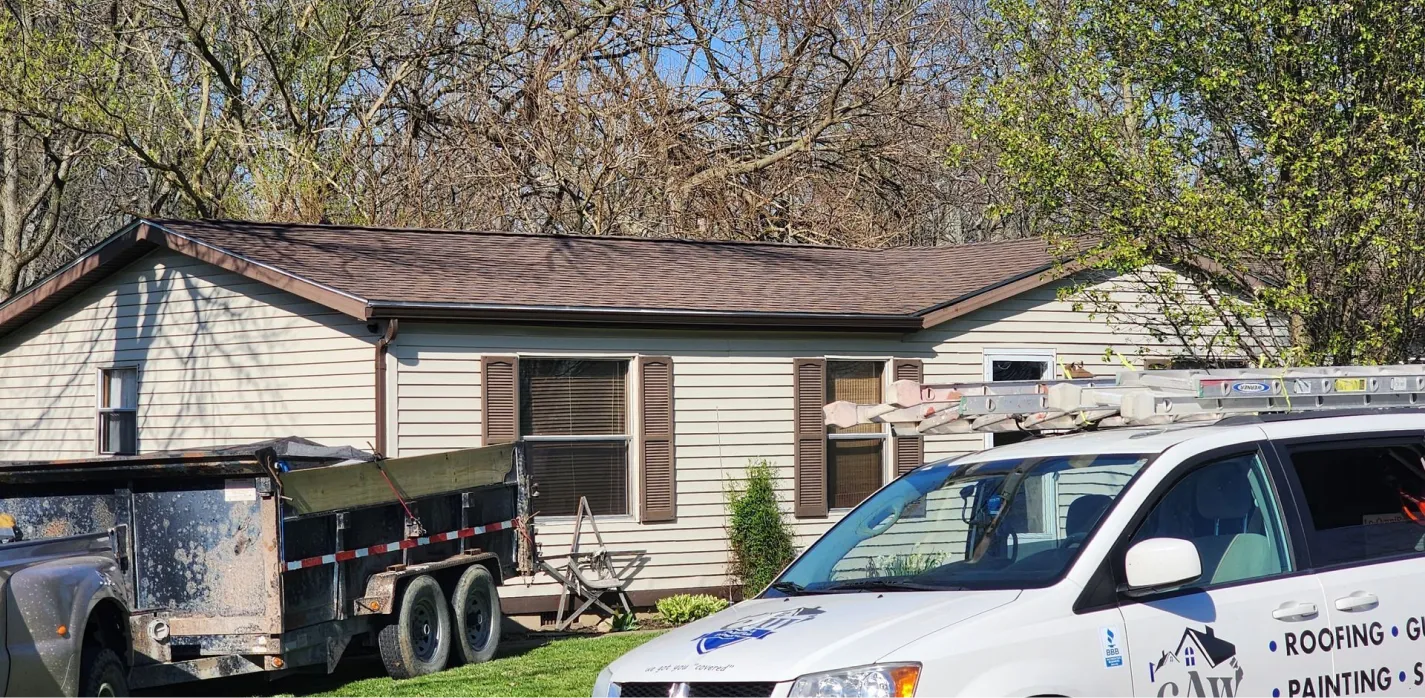
Limit Additional Exposure Until Roof Repairs Can Begin
A damaged roof can become more vulnerable each time rain or severe weather passes through the area. Even a relatively small opening can allow moisture beneath the roofing system. Temporary roof protection creates a barrier over appropriate damaged areas while permanent repair plans are being determined.
Roof tarping service may be appropriate after wind lifts or removes roofing materials, debris strikes the roof, or another qualifying event leaves an opening exposed. The first priority is identifying the vulnerable area and determining whether it can be temporarily covered. The tarp is then secured as appropriate for the roof and visible damage.
Active roof leaks deserve attention because water does not always travel straight down from the point of entry. Moisture can move along decking, framing, and other materials before becoming visible indoors. A roof leak tarp can help limit additional direct exposure at an appropriate damaged area, but the underlying roofing problem still requires follow-up evaluation.
Our emergency roof tarping work can address several needs identified in the project scope:
- Temporary Weather Protection: We secure appropriate vulnerable roofing areas with temporary covering intended to reduce additional direct exposure while permanent repair needs are evaluated and planned.
- Storm and Wind Damage: Strong winds and severe weather can loosen, lift, or remove roofing materials, so we evaluate visible damage and determine whether temporary tarping is appropriate.
- Active-Leak Response: When an active leak is connected to an accessible damaged roofing area, temporary covering can help limit additional water intrusion until corrective roofing work can begin.
- Missing Roofing Materials: Shingles or other materials displaced by wind, impact, or severe weather can leave sections exposed, making temporary coverage useful before permanent correction.
- Falling Debris Damage: Tree limbs and other debris can damage roofing during severe weather, creating vulnerable areas that may require temporary protection before repairs are completed.
- Photo Documentation: Visible roof damage can be photographed during evaluation to create a record of observed conditions and help support planning for the next stage of roofing work.
- Follow-Up Repair Evaluation: Tarping is not the final repair, so the affected roof should be evaluated afterward to determine the appropriate permanent correction for the damaged area.
- Protection Before Permanent Repair: Temporary covering helps bridge the period between the initial roofing damage and the work needed to restore the affected portion of the roof.
Temporary protection is particularly important to understand correctly. A tarp is intended to cover a vulnerable area for a limited period. It does not restore missing shingles, correct damaged flashing, replace deteriorated roofing, or resolve every possible source of water intrusion. Permanent roof repair should follow when the roofing condition requires it.
CAW Painting & Preservation can continue that process with roof repair or roof replacement when appropriate. If surrounding components have also been affected, our capabilities include gutter work, fascia and soffit repair, siding work, and exterior wood repair. Looking at connected damage can help customers understand how a roofing event may have affected more than one exterior component.
Our approach is rooted in preservation. Our founder’s U.S. Navy background established the importance of protecting vulnerable surfaces and addressing damage in the correct sequence. Temporary protection comes first when needed, followed by evaluation and the appropriate permanent repair.
Secure Vulnerable Roofing Before More Weather Arrives
Roof damage can happen quickly. A wind event can remove shingles, falling debris can strike an otherwise functional roof, or severe weather can expose an area that had not previously shown obvious problems. Once roofing materials are displaced, the structure underneath may have less protection against the next period of rain.
Taking action after visible damage can help reduce the amount of time vulnerable areas remain directly exposed. Temporary tarping creates an interim barrier while property owners determine the appropriate repair. It can be particularly useful when permanent work cannot begin immediately or when the extent of damage first needs to be evaluated.
Homeowners should avoid assuming that an interior water stain identifies the exact point where the roof is damaged. Water can travel before it appears inside. Evaluating visible roofing conditions helps connect the interior signs with possible exterior entry points.
Commercial properties can face similar problems. A damaged roof may place offices, storage areas, tenant spaces, equipment, or customer-facing areas at risk of additional water exposure. Appropriate temporary coverage can provide an interim step while the permanent roofing scope is established.
Our broader roofing capabilities allow the temporary and permanent stages to be considered together. Roof repair may be suitable for localized damage, while more widespread deterioration may require roof replacement. The visible condition of the roofing system should guide that decision rather than the tarp itself.
Related roofline components should also be considered after severe weather. Gutters may loosen, fascia or soffits may sustain damage, and exterior wood can be affected by impact or moisture. These areas can be discussed separately when they form part of the property’s repair needs.
Photo documentation can help create a record of visible conditions during evaluation. However, the source information specifically requires verification before insurance-documentation assistance or specific response hours are advertised as guaranteed. For that reason, we do not promise guaranteed response times or insurance assistance that has not been confirmed.
Our 30 years of hands-on property experience have reinforced the value of completing work in the right order. When a roof is open to weather, temporary protection may come first. The damage can then be evaluated, permanent roofing work can be planned, and affected interior or exterior finishes can be restored after the source has been corrected.
CAW Painting & Preservation also provides drywall and plaster repair and painting for appropriate areas affected by previous water intrusion. These cosmetic repairs should follow correction of the active roofing problem so new interior finishes are not placed beneath a roof that still requires attention.
Direct owner involvement helps keep communication clear throughout the process. Customers should understand that temporary tarping protects an affected area for the interim, while follow-up evaluation determines what is required for a lasting correction.
When storms, wind, debris, or missing materials leave your roof exposed, delaying temporary protection can allow another round of weather to affect the property. CAW Painting & Preservation provides emergency roof tarping in Cincinnati, OH, with a preservation-first approach focused on temporary coverage, visible damage evaluation, and a clear transition toward the permanent roofing work the property needs.

Put Experience Behind Your Project
Talk with us about painting, preservation, repair, roofing, or remodeling for your property.
Frequently Asked Questions About Emergency Roof Tarping
-
No. Roof tarping provides temporary weather protection for appropriate vulnerable areas. Permanent roof repair or replacement should be evaluated afterward based on the condition and extent of the damage.
-
Yes. Qualifying damage caused by storms, wind, falling debris, or missing roofing materials can be evaluated to determine whether temporary tarping is appropriate for the exposed area.
-
Temporary covering may help limit additional water intrusion when an active leak is connected to an appropriate accessible damaged area. The underlying roofing problem still requires permanent correction.
-
Photo documentation of visible damage can be included during evaluation. Insurance-documentation assistance should not be considered guaranteed unless that specific service has been confirmed.
-
Yes. Follow-up evaluation can determine whether roof repair or replacement should be considered after temporary protection has been installed.